
What Planning is Involved in Tackling a Complex Cleanout Project?
Creating a Plan Is the First Step to cost efficiency
Planning is essential for any complex project. For Cleanups or Cleanouts it is essential to have a game plan from the beginning to ensure the project is tackled with maximized efficiency and minimized cost. With a solid game plan you can dispose of your waste without wasting money!
Step 1: Assess the Volume
The first impression when walking into a residential or commercial space which needs to be cleaned out can be overwhelming. To assess the volume, you need to go Room-to-Room or into each space to determine volume.
Volume drives every other consideration;
- How much Time the project will take.
- How many people the project will require to perform the Labor of removing the items.
- What Size Dumpster or if multiple dumpsters will be needed.
- What the Total Cost of the project will be.
To assess the volume, you can;
Make a list of the larger items such as bulky furniture.
Try to imagine what space the items will take up. The Waste Disposal Industry uses the unit of Cubic Yards of trash. Most lay folks can’t envision cubic yards. Perhaps use a frame of reference you can relate to such as;
- How many pick-up truck beds would it fill?
- Would it all fit in a garage bay, or two?
- How many garbage bags or barrels would it fill?
Step 2: Identify Any Items That Require Separate or Special Disposal
There are certain items which have to be recycled by government mandate – often at an additional cost, hazmat items which have to be disposed of carefully and can not be placed in a dumpster, items which should be sold rather than disposed of, and items which have other special considerations. While doing a Walk-Through of the residential or commercial space to be cleaned out, you should note these items.
Examples of Special Disposal Items Include (but are not limited to);
Surcharge/ Mandatory Recycling
- Televisions and Computer Monitors (contain leaded glass)
- Refrigerators and Air Conditioners (contain freon)
- Mattresses
- Automobile Tires
Hazmat/ Prohibited Items
- Asbestos
- Propane Tanks
- Explosives
- Liquid Paint
- Spray Paint
- Vehicle Batteries
Items to Sell or Donate
- Vehicles such as cars
- Valuable collectables
- Antiques
Special Consideration
- Vehicles such as cars (Need a tow or car carrier)
- Hot Tubs (Large, bulky)
- Confidential, Legal or Medical records (to be shredded or confidential disposal)
Step 3: Acknowledge the Time or Cost Restraints of the Cleanout Project
There is an amusing adage in the service industry; “You can do a project Fast, Inexpensive, or Done Right. Pick two.”
If you need a removal project done quickly, limit the amount of items to donate or sell. The cost will go up because you will have to pay for more items being disposed of in the landfill and less items will be reused. But pulling items out to donate or sell always bogs down the process. Another way to accomplish the project more quickly could be to add more people to do the labor.
Conversely, if you want to lower the cost of the project and time is not a constraint, you can try to sell or donate more items and do as much of the labor yourself as possible. Since dumpsters are priced by volume, if you reuse, donate, or sell items, you pay for less Cubic Yards of Waste disposal into a landfill.
These are decisions you, as the project manager, have to consider before committing resources to the project. Whether you determine speed or cost to be the benchmark for efficiency for the clean-out project will influence how you will plan on tackling it.
Step 4: Identify Resources Needed to Handle the Project
Related to Step 3, once you have determined your benchmark for efficiency and weather speed or cost is more important to your project, you need to allocate resources;
Time
Determine your deadline to get the project completed. Most people do not consciously realize time is a resource. Do you need it completed in a weekend? Before a closing date? Have a contractual limit to when the project is completed? Or have labor or help for a limited period of time?
Labor
It takes at least two people to carry a large piece of furniture. The more people you throw at a project, the quicker it will get completed. But, if you are paying for labor, the more people you throw at a project, the more expensive it will be. How many people do you need to help haul the debris into a dumpster to get the project completed within your budget and under your time constraints?
Special Consideration
Do you need a tow truck to remove a car? A clean-fill dumpster for concrete removal? A Hazmat hauler to remove an oil tank? Maybe you don’t know what will require special consideration and you should talk to an Industry Leader in the waste removal industry with your list of items to know what extra steps are needed to complete your project.
Roll-off Dumpster
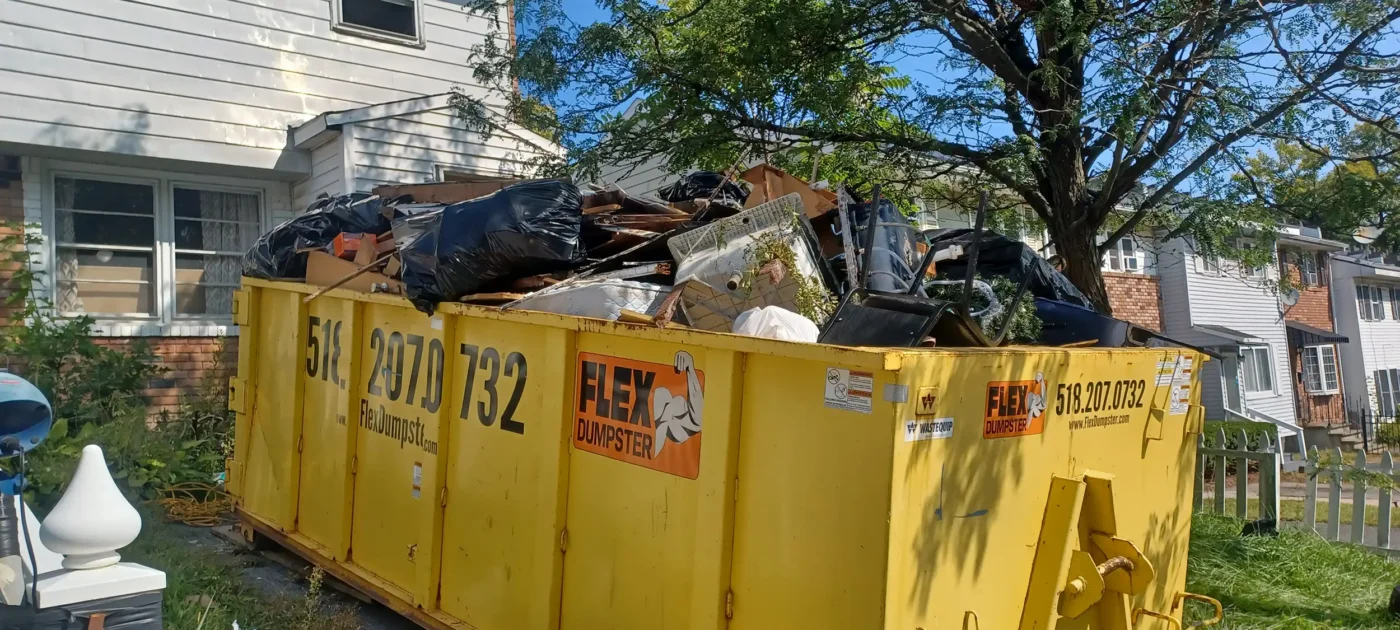
What size container or containers do you need? Flex Dumpster offers 12-yard, 15-yard, and 20-yard roll-off dumpsters for residential or commercial dumpster service. We will be happy to assist you if you’re not sure what size dumpster you need.
Step 5: Removal of the Trash, Junk, or Debris
You are up to the physical process of carrying the junk from the clean-up site into the dumpster and having your special consideration items hauled away from you. Whether friends and family are doing the labor with you, or you have hired labor or employees carrying the debris away from your job site, you should be aware of safety precautions. Moving items could be physically demanding, you want to avoid injury and fatigue.
Steps to avoid injury or fatigue include;
- Make sure laborers are physically up to the task
- Make sure everyone is hydrated
- Provide protective equipment if required
- Provide adequate light
- Educate laborers, whether paid labor or family and friends, about proper lifting and carrying techniques
- Ensure everyone takes frequent rest breaks, including meal breaks
- Possibly provide meals and hydrating drinks for your crew
- Be aware of equipment you can provide to make the job easier and safer, such as;
- Hand trucks or dollies
- Piano straps
- Flashlights
- Gloves
- Trash bins
- Garbage Bags
Step 6: Clean the Job Site
After the bulky trash and items have been disposed of, the project is never complete until it has been broom swept. Take this opportunity to walk Room-to-Room and revisit every area of the project to make sure no items were inadvertently left behind. Look for items to be disposed of, or tools and equipment you may have brought. After doing clean-outs for decades, we can confidently say we often find a wayward piece of junk or removal tool that experienced haulers accidently leave behind after a long day of strenuous physical labor. So doing a final walk-through or broom-sweep will tie up any loose ends.
Step 7: Analysis of Your Cleanout Project’s Success
Review your completed project. You should know how well you succeeded in finishing your goals based on the benchmarks you established earlier;
- Did the property get completely cleaned-out or cleaned-up?
- How long did it take?
- How much did it cost?
Reflect on your success and consider what you could have done better, quicker, or less expensively to make the project more efficient. What will you do differently for your next project?