
How to Clean Out a Hoarder’s House Using a Dumpster Rental
Cleaning out a hoarder’s house is one of the most emotionally and physically demanding projects a family can take on.
Whether you’re helping a parent, a sibling, or another loved one, or you’ve been called in as a landlord, realtor, or professional organizer, the sheer volume of belongings can make the project feel impossible to even start.
The good news: with the right plan, the right supplies, and a properly sized roll-off dumpster, a hoarder cleanout is manageable. Here’s a step-by-step guide for anyone tackling this type of project in the Capital Region area.
Understanding What Makes a Hoarder Cleanout Different
A hoarder cleanout isn’t the same as a typical junk removal or spring cleaning project. A few things set it apart:
- Volume – Hoarded homes often have items stacked floor to ceiling in every room, including hallways, stairwells, bathrooms, and garages.
- Emotional attachment – Hoarding disorder is a recognized behavioral health condition, and the person who lives in the home may feel genuine distress about parting with items that look like trash to everyone else.
- Structural and safety concerns – Blocked exits, unstable stacks, weakened flooring, pest infestations, and mold are common in severe cases.
- Hidden hazards – Spoiled food, rodent droppings, expired medications, and even hidden valuables or important documents can be buried in the clutter.
- Family dynamics – Multiple family members are often involved, and they don't always agree on how fast to move or what should be kept.
Because of these factors, a hoarder cleanout needs more patience, more planning, and often more dumpster capacity than people expect going in.
Step 1: Approach the Project with Compassion
Before a single item is thrown away, it helps to set the right tone:
- Involve the homeowner when possible. If the person who lives there is willing and able to participate, include them in decisions. Removing their sense of control can increase resistance and distress.
- Consider professional support. A therapist who specializes in hoarding disorder, a geriatric care manager, or a professional organizer experienced with hoarding cases can make the process smoother and less traumatic for everyone involved.
- Set realistic expectations. A severe hoarding situation is rarely a one-day job. Plan for the project to take several sessions, sometimes spread across weeks.
- Take breaks. Sorting through a lifetime of belongings is exhausting. Build in rest periods so decision fatigue doesn't lead to rash choices in either direction — tossing something important or keeping something that should go.
Step 2: Assess the Scope of the Project
Before ordering a dumpster, walk through the property (with proper footwear and gloves) and get a sense of:
- How many rooms are affected, and whether the clutter is contained to certain areas or spread through the entire house, garage, and yard.
- What types of materials you're dealing with — general household items, furniture, appliances, yard debris, or construction-related materials from past unfinished projects.
- Any safety hazards, such as blocked stairways, weak flooring, exposed wiring, mold, or pest activity. Severe cases may call for a pest control company or a structural inspection before cleanout crews go in.
- Whether hazardous materials are present. Items like paint cans, propane tanks, car batteries, motor oil, and old chemicals cannot go in a standard roll-off dumpster and need separate disposal.
This walkthrough will tell you what size dumpster or dumpsters you need and how many loads you’re realistically looking at.
Step 3: Sort Items Into Clear Categories
A simple sorting system keeps the project moving and reduces decision paralysis. Set up clearly labeled zones for:
- Keep – Items with genuine sentimental, functional, or financial value.
- Trash – Anything damaged, expired, unsanitary, or no longer usable. This is where your dumpster comes in.
A good rule of thumb for hoarder cleanouts: when in doubt about an item’s safety or sanitation (expired food, damaged furniture, anything with mold or pest damage), it goes in the trash category. Health and safety take priority over sentimentality.
Step 4: Choose the Right Size Dumpster
Because hoarder cleanouts generate more debris than most residential projects, sizing the dumpster correctly matters. Flex Dumpster offers three roll-off sizes to fit projects of any scale:
- 12-Yard Dumpster – Typically this smaller size dumpster would be useful for distinct projects. Such as a room or section to be cleaned out.
- 15-Yard Dumpster – Best for a single room, a garage, or the early stages of a lighter cleanout.
- 20-Yard Dumpster – A solid mid-size option for a full apartment or a house with moderate clutter throughout.
- Multiple 20-Yard Dumpsters - The right choice for whole-house hoarder cleanouts, especially when multiple rooms, a basement, and a garage are all packed with belongings.
For severe, whole-property cleanouts, it’s common to order more than one dumpster over the course of the project, or to swap out a full dumpster for an empty one so work can continue without a pause. Flex Dumpster can arrange a swap-out once your first container is full.
Step 5: Know What You Can and Can't Put in the Dumpster
Most household items are acceptable in a roll-off dumpster, including:
- Furniture, mattresses, and box springs
- Clothing, linens, and household goods
- Old appliances
- General trash and clutter
- Yard waste and light construction debris from prior home projects
Items that cannot go into a standard roll-off dumpster include:
- Paint, solvents, and other chemicals
- Propane tanks and fuel
- Car batteries and motor oil
- Tires
- Asbestos-containing materials
- Medical waste and sharps
If you’re unsure whether something is acceptable, it’s always best to ask before loading it — this keeps the project moving without delays at pickup.
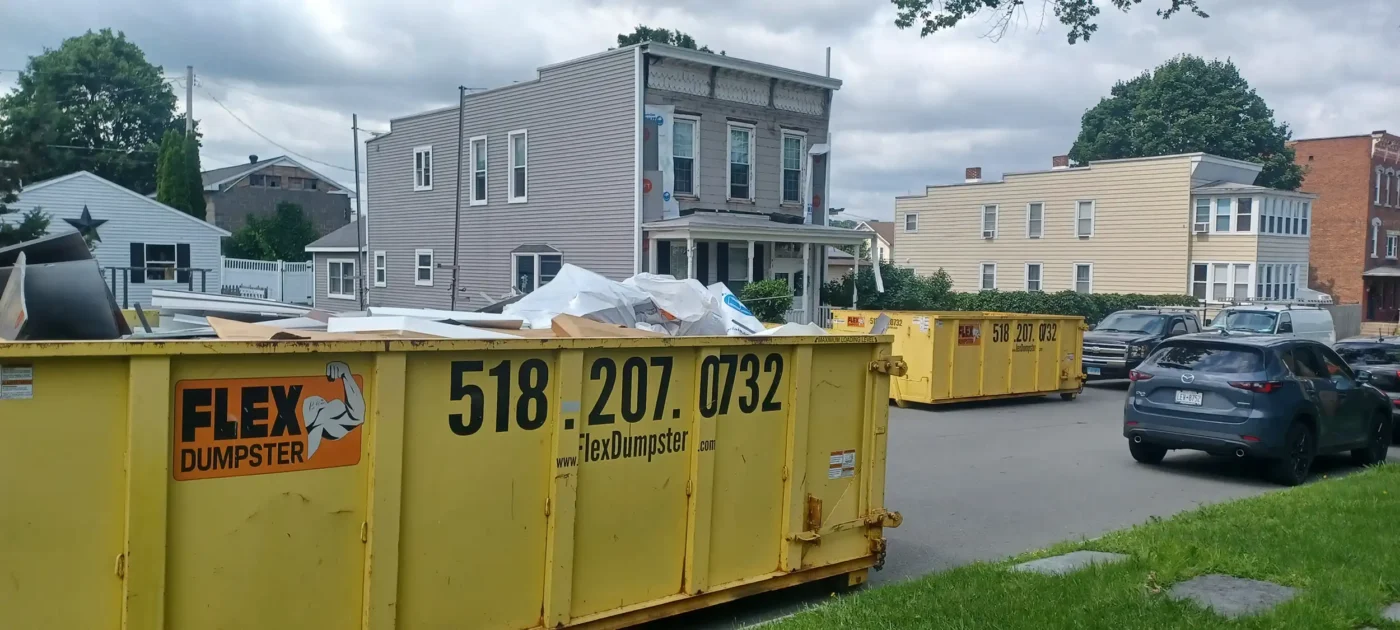
Step 6: Load the Dumpster Efficiently
A few loading tips make a big difference in how much fits and how safely the work goes:
- Load large items, like furniture first.
- Load flat items first, like doors, cardboard, and boxes, along the bottom.
- Never overfill above the fill line — dumpsters need to be level on top for safe and legal transport.
Step 7: Rent Your Dumpster From Flex Dumpster
Once you’re ready to start clearing debris, renting from a local, dependable company makes the process far less stressful. Here’s how it works with Flex Dumpster:
- Reserve online at www.flexdumpster.com or call 518-207-0732 to discuss your project and choose the right size.
- Dumpster Delivery – We deliver the dumpster to your property in the Albany and Capital Region area on the date you request.
- Load at Your Own Pace – Most rentals include a full seven days, giving you time to sort, sell, donate, and load without feeling rushed.
- Dumpster Pickup – When you're finished, or the dumpster is full, just call or text and we'll haul it away. Need a swap for a bigger job? We can arrange that too.
Final Thoughts
A hoarder cleanout is rarely simple, but breaking it into clear steps — assess, sort, size the dumpster correctly, and load thoughtfully — turns an overwhelming project into a manageable one. Local families across Albany, Troy, Schenectady, and the surrounding Capital Region trust Flex Dumpster for dependable delivery, straightforward pricing, and the flexibility to handle even the toughest cleanout projects.
Reserve Your Dumpster Today or call 518-207-0732 to talk through your project and find the right size for your cleanout.
How to Rent a Horder House Waste Dumpster
Flex Dumpster offers 12-yard, 15-yard and 20-yard roll-off dumpsters for yard waste removal.
Steps to Rent a Dumpster
- Visit www.flexdumpster.com or call 518-207-0732 to book a dumpster.
- Dumpster Delivery – We drop it off at your location.
- Load house Waste – Weekly rental allows you to work at your own pace.
- Dumpster Pickup – Once full, give us a call, and we’ll haul it away.
Renting a dumpster makes any cleanup efficient and stress-free. Get started today!